The Complete Guide to Fast Bowlers in Cricket
Exploring the art, science, and impact of cricket's speed specialists
What is a Fast Bowler?
AFast Bowleris a cricketer who specializes in bowling the cricket ball at high speeds, typically aiming to dismiss batsmen through pace, bounce, and movement.
In the dynamic world of cricket, the role of aFast Bowleris both physically demanding and strategically crucial. These athletes combine raw power with technical precision to challenge batsmen with deliveries that can exceed 90 miles per hour (145 km/h). The very essence of aFast Bowlerlies in their ability to generate tremendous velocity while maintaining control and variation.

Key Characteristics
A successfulFast Bowlertypically possesses exceptional physical fitness, strong shoulders and back, flexible joints, and the mental fortitude to maintain intensity throughout long spells of bowling.
The psychological dimension of fast bowling cannot be overstated. A skilledFast Bowlerdoesn't just rely on speed but uses it as a foundation for strategic variation. They study batsmen's weaknesses, set traps with field placements, and build pressure through consistent line and length.
Throughout cricket history, nations have developed distinct fast bowling traditions. The Caribbean produced tall, intimidating bowlers who exploited bounce, while Pakistani bowlers mastered reverse swing. Australian fast bowlers combined aggression with relentless accuracy, creating diverse approaches within theFast Bowlerdiscipline.
Bowling Techniques and Variations
Mastering diverse bowling techniques separates good fast bowlers from great ones. While raw speed provides the foundation, variation in delivery makes aFast Bowlertruly dangerous and unpredictable.
Outswing & Inswing
The art of making the ball move laterally in the air through refined grip and seam position. Outswingers move away from right-handed batsmen, while inswingers move toward them.
Reverse Swing
An advanced technique where the ball swings in the opposite direction to conventional swing, typically with an older ball. Mastering reverse swing requires precise ball maintenance and exceptional skill.
Bouncers & Yorkers
The bouncer aims at the batsman's head or shoulder height, while the yorker targets the base of the stumps or batsman's feet. These contrasting lengths create uncertainty and discomfort.
Cutters & Variations
Off-cutters and leg-cutters deviate off the pitch rather than swinging in the air. These slower variations disrupt batting rhythm and can be particularly effective in limited-overs cricket.
Did You Know?
The world record for the fastest delivery by aFast Bowleris 161.3 km/h (100.2 mph), bowled by Shoaib Akhtar of Pakistan against England in the 2003 Cricket World Cup.
Training and Physical Preparation
The making of a world-classFast Bowlerinvolves rigorous, specialized training that develops both the physical attributes and technical skills required for high-performance bowling.
Strength and Conditioning
Modern fast bowling demands comprehensive physical preparation. Strength training focuses on developing powerful legs for the run-up, a strong core for stability during delivery, and robust shoulders for generating pace. Unlike many athletes, aFast Bowlermust balance strength with flexibility to prevent injuries.
Technical Drills
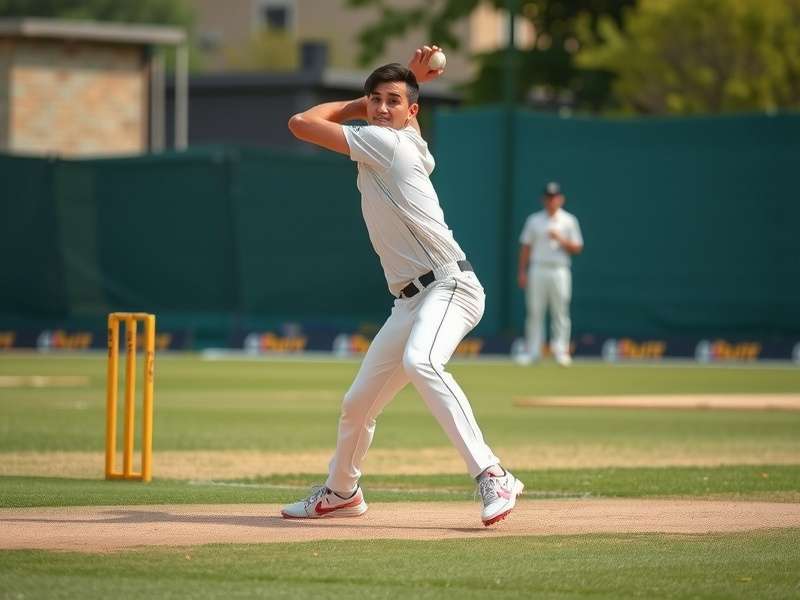
Technical proficiency separates consistent performers from occasional ones. Bowling coaches work with fast bowlers on run-up consistency, wrist position at release, follow-through mechanics, and variations. Video analysis has become an indispensable tool for refining technique.
Nutrition and Recovery
The metabolic demands of fast bowling require careful nutritional planning. High protein intake supports muscle repair, while complex carbohydrates provide sustained energy. Hydration strategies are critical, especially in hot climates. Recovery protocols including ice baths, compression garments, and adequate sleep are essential for maintaining performance throughout a season.
Injury Prevention
Fast bowling has one of the highest injury rates in sports. Preventive measures include core strengthening, flexibility work, workload management, and technical adjustments to reduce stress on the back and legs.
Legendary Fast Bowlers
Cricket history is decorated with exceptional fast bowlers who have left an indelible mark on the game through their skill, determination, and iconic performances.
Dennis Lillee (Australia)
Widely regarded as one of the greatest fast bowlers of all time, Lillee combined classical technique with fierce competitiveness. His partnership with Jeff Thomson formed one of cricket's most feared bowling attacks.
Wasim Akram (Pakistan)
The "Sultan of Swing" mastered both conventional and reverse swing with unparalleled skill. Akram's ability to bowl devastating spells with both new and old balls made him a complete fast bowling package.
Malcolm Marshall (West Indies)
Despite his relatively short stature, Marshall generated fearsome pace and movement. His skiddy trajectory and late swing made him exceptionally difficult to face, particularly in helpful conditions.
Glenn McGrath (Australia)
The epitome of accuracy and consistency, McGrath demonstrated that fast bowling excellence isn't solely about raw pace. His metronomic line and length, combined with subtle movement, brought him 563 Test wickets.
Modern Era Stars
Contemporary cricket features exceptional fast bowlers like Jasprit Bumrah, Pat Cummins, Kagiso Rabada, and Jofra Archer, who combine traditional skills with modern athleticism and sports science.
Evolution of Fast Bowling
The art and science of fast bowling have evolved significantly since cricket's early days, influenced by changes in equipment, playing conditions, coaching methods, and athletic preparation.
Historical Development
In cricket's formative years, bowling was primarily underarm. The transition to roundarm and then overarm bowling in the 19th century created the foundation for modern fast bowling. Early pioneers like Fred Spofforth demonstrated the potential of pace bowling to dominate matches.

Technical Innovations
The 20th century saw numerous technical innovations that transformed fast bowling. The development of swing bowling, particularly through English bowlers like Maurice Tate and later Sarfraz Nawaz's discovery of reverse swing, added new dimensions to pace bowling. The West Indian quartet of the 1970s and 80s demonstrated the effectiveness of sustained short-pitched bowling.
Modern Era and Specialization
Contemporary cricket has seen increased specialization among fast bowlers. Distinct roles have emerged including the new-ball specialist, first-change bowler, death-overs expert, and the genuine fast bowler who focuses on extreme pace. The rise of T20 cricket has further refined these specializations, with bowlers developing specific skills for different phases of the game.
Future Trends
The future of fast bowling likely involves even greater specialization, increased focus on injury prevention, and the development of new variations to counter evolving batting techniques. Technological advancements in equipment and biomechanical analysis will continue to refine fast bowling techniques.
The role of aFast Bowlerwill continue to evolve, but their fundamental importance to cricket's balance between bat and ball remains constant. As batting techniques advance and conditions change, the innovation and skill of fast bowlers will ensure they remain at the forefront of cricketing contests.
Impact on Cricket Strategy
The presence of a qualityFast Bowlerfundamentally shapes team strategy, influencing everything from captaincy decisions to field placements and match approach.
Match Dynamics
A skilledFast Bowlercan change the complexion of a match within a few overs. Their ability to take quick wickets, build pressure through dot balls, and break partnerships makes them invaluable assets. In Test cricket, fast bowlers often operate in spells, with captains carefully managing their workload to maximize effectiveness.
Pitch and Conditions
The characteristics of aFast Bowleroften determine how a team approaches different pitch conditions. On green, seaming pitches, swing and seam bowlers become central to strategy. On hard, bouncy tracks, tall fast bowlers who can extract bounce come to the fore. In subcontinental conditions, reverse swing specialists often prove decisive.
Limited-Overs Evolution
The rise of limited-overs cricket has created specialized roles for fast bowlers. Powerplay specialists focus on taking early wickets with the new ball, while death bowlers develop variations to contain batsmen in the final overs. The economic value of a versatileFast Bowlerin T20 leagues worldwide demonstrates their continued importance across formats.
Fast Bowling in Different Cricket Formats
The role and requirements of aFast Bowlervary significantly across cricket's different formats, each demanding specific skills and approaches.
Test Cricket
In Test matches, fast bowlers require endurance, consistency, and the ability to bowl long spells. Building pressure over sustained periods and exploiting changing pitch conditions are crucial skills.
One-Day Internationals
ODIs demand versatility from fast bowlers, who must adapt to different phases of the game. Powerplay bowling, middle-over containment, and death bowling require distinct approaches within the same match.
T20 Cricket
The T20 format emphasizes specific skills and variations. Yorkers, slower balls, and wide yorkers become essential weapons. Economy rates often become as important as wicket-taking ability.
Despite these format-specific demands, the fundamental qualities of a successfulFast Bowlerremain consistent across all forms of cricket: physical fitness, technical proficiency, mental toughness, and the ability to execute under pressure.